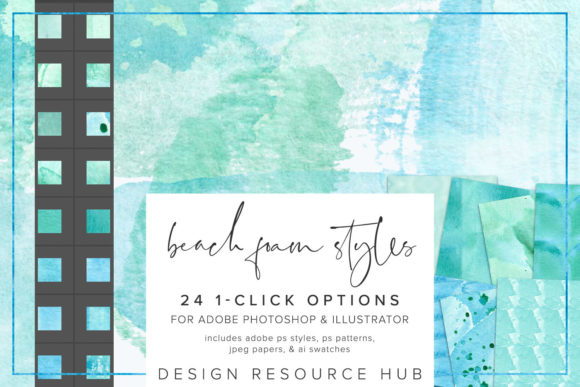
Beach Foam Watercolor Photoshop Styles: Effortless Texture for Modern Design
There is a specific kind of frustration that comes with trying to recreate organic textures digitally. You spend hours layering brushes, adjusting opacity, and tweaking blend modes, only to end up with something that looks stiff or repetitive. This is where Beach Foam Watercolor Photoshop Styles changes the workflow entirely. Instead of building texture from scratch, these styles offer a one-click solution that brings the soft, unpredictable beauty of sea foam and watercolor washes into your digital projects. Whether you are a seasoned graphic designer or a small business owner handling your own marketing materials, understanding how to leverage these tools can save you significant time while elevating the aesthetic quality of your work.
Why Organic Textures Matter in Digital Design
In an era where digital interfaces often feel sterile and overly polished, audiences are craving authenticity. Organic textures like beach foam and watercolor introduce a human element to design. They suggest movement, fluidity, and a touch of imperfection that feels welcoming. When you apply Beach Foam Watercolor Photoshop Styles, you are not just adding a pattern; you are adding atmosphere. This is particularly crucial for brands that want to convey relaxation, creativity, or natural purity. Think of wellness blogs, boutique hotel websites, or artisanal product packaging. The visual language here needs to be soft and inviting, not rigid and corporate.
The primary benefit of using pre-made styles rather than manual painting is consistency and speed. A freelancer working on a tight deadline cannot afford to spend three hours perfecting a background texture. With these styles, the complex interplay of white foam against blue-green water tones is already balanced. You get a professional look instantly, allowing you to focus on layout, typography, and message rather than getting bogged down in technical execution.
Real-World Applications for Creators and Entrepreneurs
The versatility of this asset pack means it fits into various professional and personal contexts. Here is how different users might integrate these styles into their daily workflows.
Branding and Social Media Content
For social media managers and influencers, visual cohesion is key. Imagine creating a series of Instagram posts for a summer skincare line. Using the included Adobe Photoshop .asl file, you can apply a subtle watercolor foam texture behind product shots. This creates a thematic link between the image and the concept of cleansing or refreshing. Because the patterns are seamless, you can tile them across larger formats like Facebook covers or YouTube banners without visible breaks. The ability to change the scale of the patterning ensures that the texture remains subtle and does not overpower the main subject.
Educational Materials and Printables
Educators and creators of digital printables often need backgrounds that are engaging but not distracting. A teacher creating worksheets for a marine biology unit could use these styles to add thematic borders or header accents. The JPEG paper files sized at 10 x 10 inches are particularly useful here. They can be dragged directly into document editors or used as backgrounds for printable planners and journals. The watercolor effect adds a handcrafted feel that makes educational materials feel less like standardized tests and more like creative explorations.
Web Design and UI Accents
Web designers looking to break away from flat design trends can use these styles to add depth to user interfaces. By applying the texture to specific sections of a landing page, such as a testimonial block or a call-to-action area, you create visual interest that guides the eye. The Adobe Illustrator .ai swatch file allows vector-based designers to maintain scalability. This means the texture can be applied to shapes and icons that need to resize perfectly for mobile and desktop views without losing clarity. It is a practical way to add warmth to otherwise cold digital spaces.
Technical Integration and Workflow Efficiency
One of the most appealing aspects of Beach Foam Watercolor Photoshop Styles is the seamless installation process. For those who are not technically inclined, the idea of importing files can seem daunting. However, the process is straightforward and designed for immediate use.
- Photoshop Users: You simply install the
.aslfile via the Styles panel and the.patfile via the Patterns panel. Once loaded, these assets appear in your libraries, ready to be dragged and dropped onto any layer. This single-click application works on text, shapes, and images alike. - Illustrator Users: The included
.aifile integrates directly into your Swatches library. This is invaluable for logo designers or illustrators who need to apply consistent textures across multiple vector elements.
The flexibility of these files means you are not locked into a single look. You can combine the styles with custom brushes to add further detail, or adjust the blending modes to make the texture interact differently with underlying colors. For instance, setting a style to "Multiply" will darken the underlying image with the texture, while "Screen" will lighten it, creating a glowing foam effect. This level of control allows for customization while still benefiting from the initial heavy lifting done by the style creator.
Considerations Before You Start
While these styles are powerful, they are tools, not magic wands. To get the best results, consider the context of your design. Watercolor and foam textures work best when they have room to breathe. Avoid using them on cluttered layouts where the texture might compete with essential information. Contrast is also important; ensure that text placed over these textured backgrounds remains legible. You may need to add a solid color overlay or adjust the opacity of the texture layer to maintain readability.
Additionally, think about your brand identity. If your brand is high-tech, industrial, or minimalist, these organic styles might clash with your core messaging. However, for lifestyle, beauty, travel, and creative industries, they are an excellent fit. Always test the styles on a few different projects to see how they interact with your existing color palette. The blue and white tones of beach foam are versatile, but they may need adjustment to match specific brand colors.
Making the Most of Your Creative Assets
Investing in quality design assets like Beach Foam Watercolor Photoshop Styles is about more than just saving time; it is about expanding your creative vocabulary. It allows you to experiment with aesthetics that might be difficult to achieve manually. For hobbyists, it lowers the barrier to entry for creating professional-looking art. For professionals, it streamlines production without sacrificing quality.
Remember to explore the full range of included files. Do not limit yourself to just the Photoshop styles if you work primarily in Illustrator, or vice versa. The cross-compatibility of these assets means you can start a project in one program and finish it in another, maintaining visual consistency throughout. By understanding the strengths of each file type and the realistic applications of the texture, you can transform ordinary designs into compelling visual stories that resonate with your audience.